Source taiwan adjustable underwear for SPA, Hotel, and Home Use
Compare 30 listings of taiwan adjustable underwear designed for SPA, hotel, and home applications. Buyers can review materials like PP non-woven and cotton, along with OEM services and packaging options to find suitable suppliers.
Key considerations
Products List




Comprehensive Sourcing Guide
Strategic Sourcing Guide for Adjustable Underwear Solutions
Understanding the Product Landscape and Technical Specifications
When researching the category of adjustable underwear, particularly within the context of global B2B procurement, it is essential to distinguish between traditional woven garments and the specific subset of disposable or non-woven solutions often associated with OEM services. The core keyword "taiwan adjustable underwear" suggests a search for versatile, size-adaptable intimate apparel, yet the available market data reveals a significant presence of non-woven, disposable products designed for specific industrial and hospitality applications. Buyers must first clarify whether their procurement need aligns with reusable cotton-blend garments or single-use protective wear, as the technical specifications diverge sharply between these two categories.
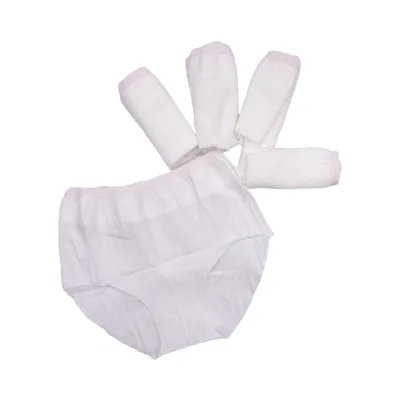
The technical profile of the non-woven segment is defined by specific raw materials and construction methods. The primary raw material observed in this sector is Polypropylene (PP) or PP Non-Woven fabric. These materials are selected for their cost-effectiveness and functional properties rather than long-term durability. The weight of the material is a critical technical parameter, typically ranging from 20 to 50 grams per square meter (g/m²), with specific product listings citing weights of 20g, 30g, and 40g. This lightweight construction is fundamental to the product's intended use as a disposable barrier or comfort layer in settings like spas, hotels, and medical facilities.
The manufacturing techniques employed for these items are predominantly "Plain Dyed" or "Printed," depending on the specific model and target market. The sizing architecture varies significantly between product lines. Some models utilize a standard sizing approach with specific dimensions provided for Small (S), Medium (M), and Large (L) variants, such as 50x24cm, 52x28cm, and 54x30cm respectively. Other models offer a broader range extending from S to 3XL, or even a "one size" configuration designed to accommodate a wide demographic through elastic or adjustable features. The physical dimensions and the "adjustable" nature of the product are often derived from the cut and the inclusion of spandex yarn in cotton blends, or the inherent elasticity of the non-woven material itself.
Compliance, Certification, and Regulatory Standards
Navigating the regulatory landscape for underwear, especially when sourced from international markets, requires a rigorous verification of certifications and standards. While the term "adjustable" implies a mechanical or sizing feature, the compliance requirements are often tied to the material safety and the intended application environment. For products marketed for use in beauty salons, spas, hotels, and medical settings, specific certifications are frequently cited in product documentation.
The observed compliance landscape includes standards such as CE (Conformité Européenne), SGS (a global inspection and verification company), and RoHS (Restriction of Hazardous Substances). These certifications indicate that the product meets specific safety and environmental requirements, particularly regarding the absence of harmful chemicals. In the medical or high-hygiene sector, additional certifications like ISO13485 (Quality Management Systems for Medical Devices) and ISO13485 are critical indicators of a supplier's capability to manufacture products that meet stringent hygiene and quality control protocols.
Buyers must exercise caution when interpreting certification claims. While some product listings explicitly mention CE, SGS, and RoHS, others may reference OEKO-TEX, a standard for textile testing. However, the availability of OEKO-TEX certification in the provided data is marked as low-confidence background information. Therefore, procurement teams should not assume this certification is present unless verified directly with the supplier. The verification process should involve requesting current, valid certificates from the manufacturer rather than relying on general product descriptions. The presence of these standards is particularly vital for products labeled as "Disposable Cotton Panties" or those intended for hospital and home use, where material safety is paramount.
Cost Drivers and Pricing Dynamics
The pricing structure for adjustable underwear is influenced by a complex interplay of material costs, order volume, and supply chain logistics. The observed price range for these products in the current market is notably low, spanning from 0 to 20 USD. This wide range often reflects the difference between single-unit retail prices and bulk wholesale pricing, or it may indicate the cost of very lightweight, disposable items versus more substantial reusable garments.
The Minimum Order Quantity (MOQ) is a primary driver of unit cost. The data indicates a vast disparity in MOQ requirements, ranging from as low as 5 pieces to as high as 500,000 pieces. This suggests that suppliers are catering to both small-scale trial buyers and large-scale industrial distributors. For buyers seeking adjustable underwear for specific niche applications, a lower MOQ might be available, but the unit price will likely be higher. Conversely, securing a price within the lower end of the observed range typically requires committing to an order volume that approaches the higher end of the MOQ spectrum.
Material composition is another significant cost factor. Products utilizing PP (Non-Woven) material generally command lower prices due to the low cost of raw polypropylene and the efficiency of non-woven manufacturing processes. In contrast, items incorporating cotton and spandex yarns, which offer higher comfort and reusability, may carry a higher material cost. The "Supply Type" is also a cost determinant; OEM (Original Equipment Manufacturer) and ODM (Original Design Manufacturer) services often involve additional costs for branding, custom packaging, and design development compared to off-the-shelf generic products. Buyers should anticipate that customization, such as specific packaging configurations like "1PC/Bag" or "500PCS/CTN," will impact the final landed cost.
Typical Applications and Usage Scenarios
The versatility of adjustable underwear is best understood through its diverse application scenarios. The data highlights a strong concentration of these products in the hospitality, wellness, and medical sectors. Specific applications mentioned include beauty salons, spas, massage centers, hotels, and travel environments. In these contexts, the "adjustable" feature is often secondary to the need for hygiene, disposability, and convenience.
For instance, disposable cotton panties or non-woven briefs are widely used in hospitals, hotels, and spas where single-use hygiene is a priority. The "Application" field explicitly notes usage in "Beauty Salon, SPA, Hotel, Travel," indicating that these products serve as a convenient, sanitary solution for guests who may not wish to wear their own undergarments during treatments or stays. The "Usage" description further expands this to include "Home Use," suggesting a growing market for disposable comfort wear in personal settings.
The distinction between "Adult" and "Unisex" age groups is also relevant. While many products are designed for adult use, the "Unisex" classification broadens the potential market to include facilities serving mixed demographics. The "Style" attribute, described as "Everyday," implies that these products are not limited to medical emergencies but are suitable for general daily use in environments where comfort and hygiene are balanced. The specific model numbers, such as "LY-NU-O" or "B6002," often correspond to specific application profiles, with some models optimized for "Beauty Salon" use and others for "Hospital" settings.
Supplier Evaluation and Sourcing Strategy
Evaluating suppliers for adjustable underwear requires a focus on their production capabilities, supply chain transparency, and flexibility. The "Supply Type" is a key indicator of a supplier's capability; many listed suppliers offer both OEM and ODM services. This flexibility allows buyers to either source generic products with their own branding or collaborate on custom designs. The origin of the products, specifically noted as "Hubei-China" in the provided data, provides a geographical context for the supply chain. Buyers should verify if this origin aligns with their logistical preferences and if the supplier has a track record of exporting from this region.
When assessing potential partners, the "Lead Time" is a critical factor. The data mentions a "7 days sample order lead time," which suggests that suppliers are capable of rapid prototyping and sample production. However, bulk lead times are not explicitly defined in the provided facts. Buyers must directly inquire about production lead times for large orders, as these can vary significantly based on order volume and material availability. The "Single package size" and "Single gross weight" (e.g., 0.100 kg) are also useful metrics for calculating shipping costs and logistics planning.
A robust supplier evaluation should also include a review of their packaging capabilities. The data shows a variety of packaging options, ranging from "1PC/Bag" to "500PCS/CTN" and "Inner: PVC Bags or PE Bags Outer: Cartons." The ability to customize packaging is often a requirement for brands entering the hospitality or retail markets. Suppliers who can accommodate specific packing requirements, such as "100PCS/MID Bag," demonstrate a higher level of operational flexibility.
Quality Control and Long-Term Procurement Considerations
Ensuring consistent quality in adjustable underwear procurement involves establishing clear quality control (QC) protocols and understanding the long-term implications of the product lifecycle. For non-woven products, QC checks should focus on material consistency, specifically the weight (20-50g/m²) and the integrity of the non-woven structure. For cotton-blend items, attention must be paid to the quality of the spandex yarn and the durability of the "Printed" or "Plain Dyed" finishes.
The "Feature" attributes, such as "Breathable," "Eco-Friendly," and "Quick Dry," are claims that require verification. While these are listed as product attributes, buyers should request test reports or third-party validation to confirm that the products actually meet these performance standards. The "Anti-Bacterial" feature, in particular, is a significant selling point for medical and hospitality applications and should be backed by specific testing data.
Long-term procurement considerations involve assessing the supplier's ability to maintain consistency over time. The wide range of MOQs (5 to 500,000) suggests that suppliers may have different production lines or capacity constraints. Buyers should ensure that the supplier can scale production up or down without compromising quality. Additionally, the "Standard" attributes, such as "S M L XL" or "one size," should be reviewed to ensure they align with the buyer's target demographic.
The following table summarizes key technical and commercial parameters observed in the market for comparison:
| Parameter | Observed Range / Value | Notes for Verification |
|---|---|---|
| Raw Material | PP, PP (Non-Woven), Cotton, Spandex | Verify material composition for intended use. |
| Material Weight | 20g - 50g/m² (Specific: 20, 30, 40g) | Check for consistency in weight per unit. |
| Size Options | S, M, L, S~3XL, One Size | Confirm dimensional accuracy (e.g., 50*24cm). |
| Certifications | CE, SGS, RoHS, ISO13485, ISO | Request valid certificates; verify OEKO-TEX status. |
| MOQ | 5 - 500,000 pieces | Negotiate based on order volume and pricing. |
| Packaging | 1PC/Bag to 500PCS/CTN | Confirm inner/outer packaging materials (PVC/PE). |
| Lead Time | 7 days (Sample) | Inquire about bulk production lead times. |
| Origin | Hubei, China | Verify logistics and export capabilities. |
In conclusion, sourcing adjustable underwear requires a nuanced approach that balances technical specifications, regulatory compliance, and cost efficiency. By focusing on verified data points such as material weights, certification statuses, and packaging configurations, buyers can make informed decisions that align with their specific operational needs. The market offers a diverse range of options, from disposable non-woven solutions for hospitality to reusable cotton blends for everyday use, each with its own set of procurement considerations.
FAQs
What materials are used for taiwan adjustable underwear?
The primary materials are PP Non-Woven fabric or cotton blended with spandex yarn. Some products feature a weight of 20 to 50 grams per square meter, while others use specific weights like 20, 30, or 40 grams depending on the model.
Which certifications do taiwan adjustable underwear products hold?
Common certifications include CE, SGS, RoHS, and ISO13485 for medical-grade hygiene. Some listings also mention compliance with standards like CE and ISO, ensuring safety for use in hospitals, spas, and hotels.
How is the sizing structured for taiwan adjustable underwear?
Sizing typically ranges from S to L with specific dimensions like 50x24cm for Small. Other models offer broader ranges from S to 3XL or utilize a one-size-fits-all design for versatile application in hospitality settings.
Can I find taiwan adjustable underwear with custom packaging options?
Yes, suppliers offer various packaging configurations such as 1PC per bag or 500PCS per carton. Inner packaging often uses PVC or PE bags, while outer packaging consists of cartons to protect the goods during shipping.
What is the lead time for sample orders of taiwan adjustable underwear?
Sample orders can be supported with a lead time of approximately 7 days. This allows buyers to verify product quality and specifications before committing to larger bulk orders for their specific needs.
Where are taiwan adjustable underwear products typically manufactured?
Products are often sourced from Hubei, China, though the core keyword implies a focus on Taiwan. Buyers should verify the actual origin with suppliers as the provided data highlights Hubei as a specific production location.